When Grief Meets Hope
David+ Larlee
 Originally preached as a sermon at St. Bartholomew’s Dallas
The Silence of Loss
The first thing to understand about Bartholomew is how little we know about him. Unlike Peter, who walked on water, or John, who was called “the beloved disciple,” Bartholomew remains largely silent in the Gospel accounts. He’s mentioned in the lists of disciples, but his voice, his personality, his story remain mostly hidden from us.
In many ways, this makes him the perfect saint for those who are grieving. Grief often renders us speechless. We find ourselves at a loss for words. Friends and family ask, “How are you doing?” and we don’t know how to answer because we don’t know ourselves.
Sometimes grief feels like being erased—like the person we used to be has disappeared along with what we’ve lost. We feel invisible, forgotten, voiceless. In these moments, Bartholomew’s quiet presence in the Gospel story becomes oddly comforting. He was there. He mattered. Even though we don’t know his words, we know he was chosen, loved and used by God.
Your grief doesn’t make you less important to God. Your loss doesn’t erase your value. Even when you can’t find words, even when you feel invisible, you are seen and known and cherished.
The Grace to Truly Believe in Dark Times
The collect for Saint Bartholomew says God gave him “grace truly to believe.” But what does it mean to believe when everything feels broken? What does faith look like when life has fallen apart?
Let me be clear: true belief in times of grief doesn’t mean pretending everything is fine. It doesn’t mean suppressing your tears or putting on a brave face for others. True belief means wrestling with God, not avoiding him. It means bringing your anger, your questions, your despair directly to the throne of grace.
The Psalms are full of people doing exactly this. “My God, my God, why have you forsaken me?” That’s not weak faith—that’s raw, honest faith. It’s the faith of someone who believes God is big enough to handle their pain.
In Hebrews, we read something remarkable: “You have come to Mount Zion, to the city of the living God, the heavenly Jerusalem, and to innumerable angels in festal gathering, and to the assembly of the firstborn who are enrolled in heaven.” (Hebrews 12:22-23a)
When you’re grieving, this might sound like spiritual fantasy. A heavenly party? Angels celebrating? It can feel almost offensive when you’re drowning in sorrow. But look closer at what this passage is really saying.
It’s telling us that there’s a reality beyond what we can see—a reality where those we’ve lost are not truly lost, where brokenness is being healed, where every tear will be wiped away. It’s not asking us to pretend we’re happy. It’s inviting us to believe that our current pain is not the whole story.
True belief in times of grief means holding two truths simultaneously: This hurts terribly, and God is still good. This feels impossible, and God is still working. I can’t see the way forward, and God still has a plan. This tension isn’t a failure of faith—it’s the mature faith of people who refuse to let go of God even when they can’t understand him.
The Message of Better Blood
Hebrews tells us about “Jesus, the mediator of a new covenant, and the sprinkled blood that speaks a better word than the blood of Abel.”
Abel’s blood cried out for vengeance after he was murdered by his brother. It was the voice of injustice, of senseless loss, of a life cut short. If you’ve lost someone, you know that voice. It’s the voice that asks, “Why them? Why now? Why this way?” It’s the voice of anger at the unfairness of it all.
And Jesus’ blood speaks a different word. It doesn’t silence the cry of injustice—it answers it. It says, “Death will not have the final word. Love is stronger than loss. What is broken will be made whole.”
This doesn’t make grief go away, but it changes its meaning. Your loss still hurts, but it’s not meaningless. Your tears still fall, but they’re not falling into an empty void—they’re falling into the hands of a God who collects them, treasures them and promises to wipe them away.
The message of Jesus’ blood is not that bad things won’t happen, but that when they do, they’re not the end of the story. Every funeral procession will one day become a resurrection parade. Every goodbye is preparing for a hello that will never end.
Preaching Hope in the Valley
The collect for St. Bartholomew asks that we might “preach what he taught.” But what do you preach when you’re grieving? How do you share hope when you’re struggling to find it yourself?
Sometimes the most powerful preaching happens without words. When others see you choosing love over bitterness, faith over despair, hope over cynicism in the midst of loss, you’re preaching a sermon more powerful than any words.
This doesn’t mean being constantly positive or pretending you’re fine. It means allowing others to witness your honest struggle with faith. It means letting them see that it’s possible to grieve deeply and still believe God is good.
Your presence in church on hard days preaches hope. Your willingness to keep praying when prayers feel empty preaches hope. Your choice to keep loving when love has brought you pain preaches hope.
Bartholomew’s ultimate sermon wasn’t spoken—it was lived. Tradition tells us he traveled to distant lands, far from everything familiar, to share the good news of God’s love. He left his comfort zone because he believed the message was worth sharing.
When you’re grieving, everything feels foreign, uncomfortable, unfamiliar. But what if this journey through grief is also a mission field? What if your willingness to keep believing in the darkness gives others permission to hope in their own dark places?
The Promise of Reunion
The assembly in heaven that Hebrews describes isn’t just about those who have died—it’s about a future reunion that includes all of us. It’s about the day when grief will be a memory, when every tear will be wiped away, when death itself will die.
This promise doesn’t trivialize your current pain—it contextualizes it. Your grief is real, and it’s temporary. Your loss is devastating, and it’s not permanent. The separation you feel is agonizing, and it’s not eternal.
If you’ve lost someone you love, they’re not truly lost—they’ve just arrived at the destination before you. They’re part of that great assembly, enrolled in heaven, waiting for the great reunion when God makes all things new.
This hope doesn’t make today’s tears less valid, but it does make them less final.
Living Between Grief and Glory
We live in the tension between grief and glory, between sorrow and hope, between the already and the not yet. Like Bartholomew, we may not have all the answers, but we have the grace to keep believing, keep hoping, keep loving.
Your grief is not a failure of faith—it’s evidence of love. The depth of your sorrow reflects the depth of your care. God doesn’t want you to stop grieving; he wants to grieve with you and carry you through it.
There will come a day when sorrow and sighing will flee away, when every wrong will be made right, when every goodbye will become a hello. Until that day, we hold onto hope not because our circumstances demand it, but because our God deserves it.
What is our hope? He who promised is faithful. He who began a good work in you will complete it. He who allowed his own Son to taste death for every person will not abandon you in your darkness.
Like Bartholomew, you have been given grace—grace to believe when believing is hard, grace to hope when hoping seems foolish, grace to love when love brings pain.
In your grief, you are not alone. In your sorrow, you are not forgotten. In your loss, you are not lost. You are part of the great assembly, surrounded by a cloud of witnesses, held by everlasting arms.
“Almighty and everlasting God, who gave to your apostle Bartholomew grace truly to believe and to preach your Word: Grant that your Church may love what he believed and preach what he taught; through Jesus Christ our Lord, who lives and reigns with you and the Holy Spirit, one God, for ever and ever. Amen.” – The Book of Common Prayer
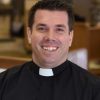
David+ Larlee is vicar of St. Bartholomew's Church in Dallas. He is a Canadian who came to Dallas via London, UK. In 2004 he was ordained as an Anglican priest and served an inner-city congregation in London for 10 years. David and Rachel have three young sons. His interests include ice hockey (especially the Dallas Stars), reading and live music. He obtained a Bachelor of Arts from Mount Allison University in 2000, a Master of Arts from the University of Western Ontario in 2001 and a Bachelor of Theology from the University of Oxford in 2004.
Category: Faith Formation
Tags: Hebrews 12:22-23, St Bartholomew, grief