From Consumer to Participant: Reclaiming the Sacramental Life of Youth
Guest
 By Ryland Brown, associate priest of youth and recovery at St. Andrew’s Church in Little Rock, Arkansas
The great danger to a student’s faith is not secularism, liberalism, modernism, Christian nationalism, progressivism or any other “ism” but a reduced Christianity that fosters youth ministry as a means for consumerism instead of participation in the life of Christ. The Sunday morning liturgy reinforces participation through standing, kneeling, singing, sitting, crossing oneself and receiving Holy Communion. The people of God get their whole bodies involved!
When tempted to ask questions like, “How are we going to reach children?” we need to pivot our direction to Scripture and the creeds to fully believe there is one Church and that God has given us what we need for the youngest among us to participate in the Body. When the church gathers on Sunday morning, I hope the questions the people are asking are deeper than, “Did I like this?” I hope they wonder about their role in the work of God and the sacramental life of the church. Because there is one Church, this deeper question should resonate through the ministries of the church, including youth ministry. “Do the kids like this?” is not the driving question of how youth ministry should operate even though we want and hope it resonates. We should instead be driven by questions of how to foster an environment that helps children participate in the work of God and the sacramental life of the church. We help them move from consumers to participants.
When the Apostle Paul spoke of his ministry to the church at Corinth, he did not come with superiority of speech or wisdom, but he determined to know nothing among them except Jesus Christ and him crucified. He was full of weakness and most likely a bad public speaker, but he came in a demonstration of the Spirit and power (1 Corinthians 2:1-5). The demonstration of the power of God happens in unimpressive things: the bread, the wine and water. Youth ministry does not need to be powerful by the world’s standard of what is attention grabbing to be efficacious. Short videos on social media easily hold our attention, but that attention-grabbing behavior numbs our minds. While a screen demands the eyes, participation in the life of God demands the whole life. We move from asking what grabs attention to asking what forms us into the likeness of Jesus.
If we move from children being consumers to participants, then the practical outflow of that ministry will be the things God has already given the Church to participate in. Ministry of the Word. Prayer. Sacrament. Service. Community. If God uses these means, by the power of the Holy Spirit, to allow his people to participate, how can we make these opportunities priority in youth ministry?
Instead of topical talks on life skills, we move to catechesis. We teach them to navigate the narrative of Scripture instead of just using it for advice on how to live. Instead of service as a means to make sure students have their volunteer hours, we move to our liturgy after the liturgy. Our service helps them participate in Christ’s care of the world. Instead of just extemporaneous prayers to open and close youth events, we move to helping students find rhythms through the Daily Office and lectionary.
While there are moments where topical talks on life skills, extemporaneous prayers and fun events can be helpful, we should keep moving toward and praying for wisdom in building youth ministries that value participation instead of consumerism. There are a lot of things we could do to keep their attention, but what we ultimately want is for our youngest to participate in the grace that God has given to the one Church. We are not seeking to entertain them for an hour; we are seeking to immerse them in the life of Christ for eternity.
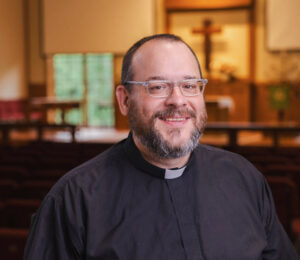
Ryland Brown is the associate priest of youth and recovery at St. Andrew’s Church in Little Rock, Arkansas. Ordained as a priest in the Anglican Mission in America (AMiA) in 2023, Ryland previously served as a senior pastor and hospice chaplain. He holds degrees in educational administration, Bible and preaching, and is currently preparing for doctoral studies focused on preaching and teaching in the context of recovery. In his spare time, he enjoys helping pastors master the use of Logos Bible Software. Ryland and Deborah have been married for 20 years and have three children.